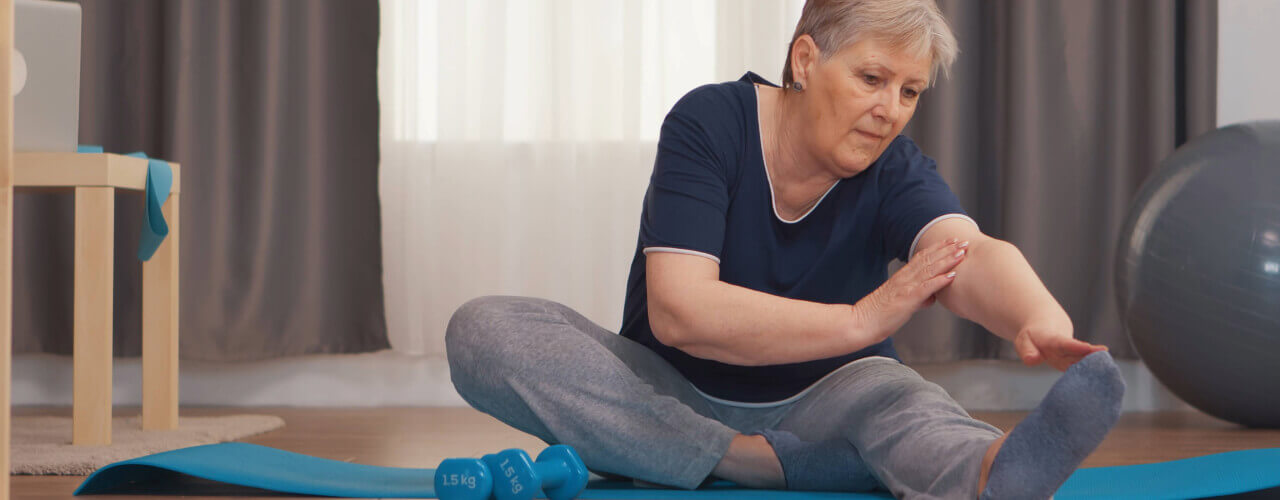
Parkinson’s disease, particularly as it progresses, can profoundly affect your quality of life. It restricts your mobility and independence, impacting your gait, balance, and posture. But one of its earliest symptoms, tremors, can also cause problems. Fortunately, geriatric Parkinson’s therapy with First State Rehab at Home can help!
Tremors are one of four main symptoms of Parkinson’s disease–over 80% of people with the condition experience them. They’re also the first symptom many people encounter. It’s no surprise, then, that tremors–whether in the hand, legs, or jaw–have become synonymous with Parkinson’s disease.
While Parkinson’s tremors aren’t typically as debilitating as other symptoms, they can still affect quality of life. Parkinson’s tremors usually go away with movement–but will return when you hold your hand or limb in the same position. For example, you might scoop up a spoonful of soup without issue but then spill it before you can take a bite.
Geriatric Parkinson’s therapy with First State Rehab at Home can help you manage all symptoms of the condition, including tremors and other movement issues. Best of all, we do it in the comfort of your own home–as a home-based physical therapy practice, you’ll never have to arrange a ride to come see us!
Are you curious to learn more about how we serve Parkinson’s patients ? Schedule an at-home consultation today!
What Exactly Is a Parkinson’s Tremor?
The classic Parkinson’s tremor is a slow, rhythmic movement that worsens while at rest and disappears when you move. It primarily occurs in the following locations:
- Hand
- Foot
- Leg
- Mouth
- Jaw
- Chin
- Tongue
Some people experience an internal tremor. An internal tremor isn’t visible to others, but you’ll feel a shaking sensation in your chest, trunk, or limbs.
For most people, a tremor is the first sign that they’re developing Parkinson’s disease. The tremor may be annoying in the early stages, but it typically doesn’t interfere with day-to-day life. However, as Parkinson’s progresses, the tremors can worsen, leading to difficulties with actions that require your fine motor skills, such as writing or brushing your teeth.
The other thing to remember about Parkinson’s tremor is that some people may confuse it with other conditions, namely essential tremor. What sets Parkinson’s tremor apart is that it’s worse when you’re at rest and improves with movement. For other types of tremors, that pattern reverses.
How Geriatric Parkinson’s Therapy Can Help Address Tremors
While medication can help manage Parkinson’s tremors, it’s not always effective, especially compared to some of the condition’s other motor symptoms. However, one front-line Parkinson’s treatment does help: physical therapy!
Targeted exercise is one of the best ways to manage Parkinson’s symptoms across the board, and evidence shows that it can also delay the onset of the condition. This includes Parkinson’s tremors, particularly hand tremors. Hand exercises may decrease the severity of these tremors, which helps you regain some of your fine motor skills.
If you experience tremors in your legs or foot, physical therapy can help you regain balance and stability, reducing the likelihood that those tremors may lead to a fall. While not technically a tremor, freezing gait is another symptom unique to Parkinson’s disease that can have a similar impact.
Freezing gait occurs when you are temporarily unable to move your feet even when you want to. It’ll cause you to make several quick steps in place even as your torso wants to keep moving forward, making a fall much more likely. Our therapists can show you strategies to help you “unfreeze” and move safely forward.
At-Home Techniques Used in Geriatric Parkinson’s Therapy
The First State Rehab at Home physical therapists have a wealth of different approaches and techniques available to help you manage your Parkinson’s symptoms, improve your mobility, and prevent falls.
Exercise is the foundation of most of our treatment approaches, and we’ll create a customized program that addresses your exact symptoms, ability levels, and overall goals. Here are a few areas that we might focus on:
- Aerobic Exercise: An aerobic exercise program, such as riding a stationary bike, can help manage motor-related symptoms.
- Strength Training: Building muscle strength can help with stability, balance, and overall fitness
- Gait Training: If you have an impaired walking pattern (such as tremors in your legs or feet), gait training can correct those impairments, decreasing your fall risk.
- Balance Training: Targeted balance exercises will also help keep you on your feet.
- Hand Exercises: Specialized hand exercises can help manage hand tremors while helping improve your fine motor skills
- Functional Training: Struggling with a specific activity? We’ll help you “train” for that activity through an exercise plan that mimics its movements.
In addition to exercise-based treatment, we may utilize electric stimulation therapy to help manage hand tremors. We’ll bring a portable TENS unit to your home to use as part of your treatment program.
Start Your Home-Based Physical Therapy Program Today!
If you have Parkinson’s disease and struggle with tremors, First State Rehab at Home can help! We’ll bring our top-notch physical therapy to your home so you can focus on therapy without worrying about scheduling rides or getting to a clinic.
Ready to get started? Schedule an at-home consultation today!
Sources:
- https://www.apdaparkinson.org/article/freezing-gait-and-parkinsons-disease/
- https://www.apdaparkinson.org/what-is-parkinsons/symptoms/tremor
- https://pubmed.ncbi.nlm.nih.gov/36205810/
- https://pubmed.ncbi.nlm.nih.gov/33981478/
Tags: Natural Pain Relief, Parkinson Disease, Physical Therapy, Physical therapist, Natural Treatment